
When Components Disappear: Bare Die as a Building Block for Sustainable Obsolescence Management
Long-term electronics availability is essential across many industries. Yet product discontinuations, supply allocation and technological change are creating growing challenges for developers and procurement teams. Particularly in long-life systems for defense, military, medical and industrial applications, the unavailability of a single component can have far-reaching consequences. Systematic life cycle management combined with bare die solutions offers new ways to maintain existing designs over the long term.
Electronic systems in industrial, medical and military applications often remain in service for many years or even decades. The semiconductors used in these systems, however, frequently have much shorter life cycles. When a component is discontinued or becomes unavailable due to supply allocation, companies face the challenge of keeping existing designs in production and supporting ongoing maintenance and repairs.
Effective obsolescence management therefore begins long before a component is actually discontinued. Key measures include the early monitoring of critical components, Product Change Notifications (PCNs) and End-of-Life (EOL) notices, as well as planning potential Last-Time Buys (LTBs). KAMAKA combines these activities with procurement, testing and engineering solutions. Its services include access to obsolete components and components subject to allocation, an anti-counterfeiting program, and life cycle management covering Last-Time Buy, End-of-Life and Product Change Notification services.
Bare Die as an Alternative to Conventional Replacement Sourcing
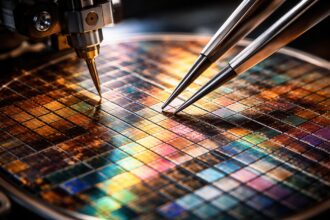
One way to address obsolescence is to use semiconductors at die level. Bare dies can be particularly valuable when the original packaged component is no longer manufactured but its underlying semiconductor function is still required.
This approach is not limited to individual component categories. It supports various industry standards as well as customer-specific configurations. Services include bare die cross-referencing, die re-engineering, access to obsolete die inventories, wafer dicing and dummy bare dies. These are complemented by wafer- and die-level testing for components including bipolar transistors, comparators, digital and logic devices, diodes, MOSFETs and JFETs, operational amplifiers, transistors and voltage regulators. Class H and Class K testing requirements can also be accommodated.
Particularly in long-life applications, this approach can help maintain an existing technical solution without immediately requiring a complete redesign of the assembly.
Reproducing Obsolete Bare Dies
When original components are no longer available, reproducing an obsolete bare die may also be an option. KAMAKA Electronic takes an approach that allows die dimensions and pad positions to be matched to the original die. Electrical parameters can be designed to meet the original datasheet or an agreed specification. Flexible minimum production quantities and cost structures are also available.
This approach is particularly suited to long-term projects where developing a new ASIC from scratch would not be economically viable. Reproducing an existing design can offer an alternative way to extend component availability for an established system.
In addition to reproduction, the portfolio includes custom bare die design. Customer-specific dies can be developed for low to medium production volumes. Flexible solutions allow adaptation to the commercial and technical requirements of each project. Multiple functions can also be integrated monolithically, and custom developments can subsequently be transitioned into standard products.
The portfolio is complemented by standard bare die products designed for long-term support and a low risk of obsolescence. Once released, these products are not modified through die shrinks or changes to the die design. The aim is also to support supply continuity independently of short-term market developments.
From Specification to Long-Term Supply
A sustainable obsolescence strategy starts with selecting the right die. As part of the project specification process, KAMAKA Electronic therefore considers not only electrical functionality but also environmental, mechanical and commercial requirements.
 Electrical inputs include, for example, circuit diagrams, parameter lists distinguishing between critical and non-critical characteristics, and potential cross-references to an equivalent packaged component. These are supplemented by environmental conditions such as temperature, pressure, gas atmosphere and radiation, along with mechanical requirements relating to dimensions, integration, interconnects and assembly. Budget, prototype quantities, planned project duration and potential future design changes are also taken into account.
This specification defines a process that extends from component selection through die preparation, prototyping, testing and qualification to optimization and production supply. Long-term planning and EOL management are integral parts of the approach.
Flexible Delivery Formats for Different Manufacturing Processes
The format in which bare dies are supplied also plays an important role. Different manufacturing processes may require different delivery formats. KAMAKA Electronic offers options including diced wafers on tape, undiced and tested wafers, and individual dies in waffle packs or Gel-Paks. Supply solutions can encompass both wafer front-end and wafer back-end processes.
This allows delivery formats to be adapted to existing manufacturing and assembly processes, rather than requiring production processes to be adjusted to a predefined delivery format.
Obsolescence Management Needs to Start Earlier
Obsolescence cannot be prevented entirely. However, companies can influence how severely a product discontinuation affects their production or their ability to support customers over the long term.
Combining continuous life cycle monitoring, early procurement, qualified testing, cross-referencing and technical alternatives such as bare die reproduction or custom die solutions significantly expands the available options. KAMAKA Electronic complements this approach with anti-counterfeiting measures, requirements engineering, qualified visual and electrical test reports, supplier risk management, and a Long-Lifetime Program spanning up to 25 years.
Particularly in defense, military, medical and industrial applications, where products often remain in service far longer than their semiconductors remain available, obsolescence management evolves from a procurement task into a long-term technical strategy.
KAMAKA Electronic Bauelemente Vertriebs GmbH supports customers throughout this process—from early life cycle monitoring, procurement and qualification to bare die, re-engineering and long-term supply solutions.